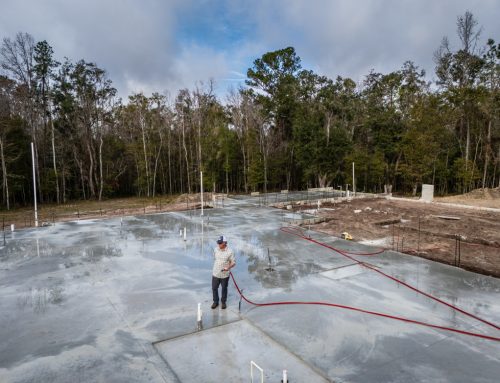
If you’ve ever been on a new home construction site, you may have noticed several recessed areas in the concrete slab. These are most likely the bathroom showers, as recessed showers are pretty standard in home building.
Today, I had an experienced trade point to an area of the slab where the future Great Room will be and ask, “What’s the deal with this recess?” It’s fun when trades with years of experience spot details they don’t usually see elsewhere.
The answer? It’s all about seamless flooring.
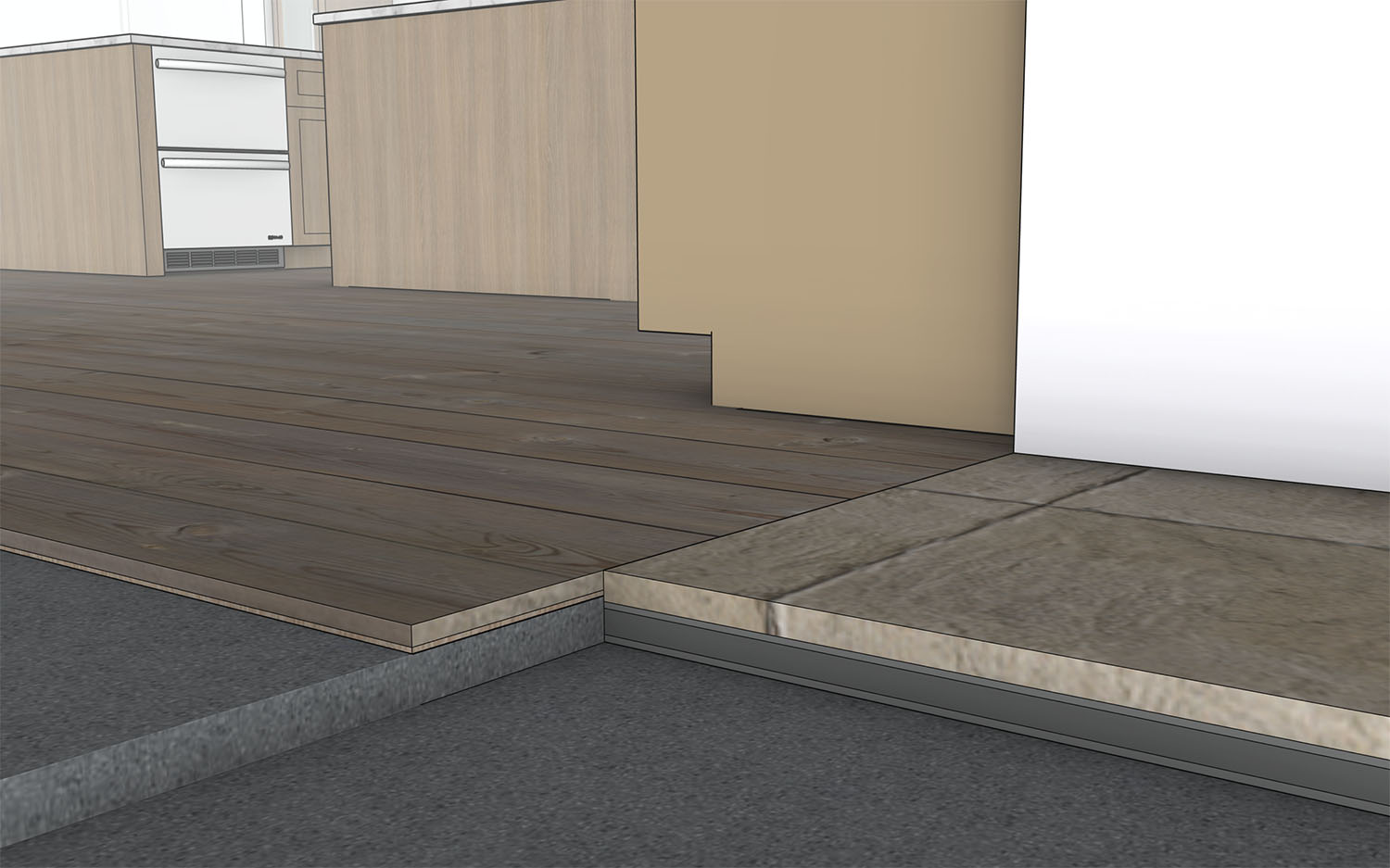
Our clients have selected both wood and natural stone floors throughout their home. The challenge? Natural stone is much thicker than wood, plus natural stone is mud set which adds even more height. If not planned for, this difference creates an uneven transition where the materials meet. Many home builders solve this with a transition strip—a small “ramp” between surfaces. While that’s the easy solution, it’s not the best one.
Instead, we account for the difference in material thickness before the slab is poured. By recessing the slab in the areas where the natural stone will be installed, we ensure that the finished floor heights will match perfectly—no awkward transitions, no trip hazards, no places for dirt to collect—just a clean, flush look.
The Great Room recess that my trade asked about today? It’s for the natural stone hearth at the front of the fireplace. Once the wood flooring and stone hearth are installed, they’ll be perfectly level. That’s the kind of detail that sets a truly custom-built home apart.
As shown in the rendered image above, we plan these kinds of details by building it on our computer before we ever build it onsite. And in the image below, you can see our masons working on the on some of the recesses in the slab.